|
Good-bye Marketing Plan, Make way for the CONNECTING PLAN

Top-down marketing is history” – Bob Lefsetz Everyone know that the Internet has changed the way business works. This is especially true when it comes to marketing. Traditional “megaphone” marketing simply does not work anymore, and this is especially true for books. For one thing, authors can’t be heard above the din of all the product and service marketers with huge budgets. And for another, most consumers are just plain turned off by the constant stream of empty marketing promises and gimmicks.
Instead of thinking about “marketing” our books, we should be figuring out how we can be “connecting” with our readers. This means: communicating your ideas to a community of readers that will be interested in what you have to say once they find out your book exists. It also means connecting you as a writer to readers who want to know what you are doing next. Connecting to communities means a creating a two-way conversation, engaging with people in conversations, about a cultural activity they really care about.
This is not the kind of marketing that tries to be as loud as possible to cut through the background noise of modern life or that follows information theory and tries to get its message across so many times that the reader will finally pay attention.
Books are special. Sure they are products, but they need special handling because we are trying to convince people to give us some of their valuable time to read them. It’s important to remember that in the modern world most people are trying to make sure they will have more money tomorrow than they have today – our growing economy is intended to create abundance. However, it’s not money, but time that is ultimately our most precious commodity because in the money economy we all know that no matter how much money we are accumulating, time is never going to be increasing for us. We have less of it every day.
So when we give our time and attention to a book, we are engaging in a truly powerful exchange between reader and writer, an exchange that writers and publishers must honor and cherish. That’s why we need to nurture the relationships between readers and writers, and why shouting from the rooftop that “I have a book here I want you to read” makes no sense at all. Nobody likes being shouted at, therefore it makes sense that they will be much less likely to sample your book than they would have been if they had learned about it through a more subtle approach.
So let’s not talk about a “Marketing Plan” for your book. Let’s think about how to create a “Connecting Plan.” We all know that when we walk into a room full of interesting people, the best way to engage with them is not to start talking about ourselves, but to look them in the eye and ask them questions that can be the beginning of a real connection between us.
Creating meaningful relationships almost always begins with an introduction and a genuine interest in the person to whom you are talking. Real engagement almost always happens one person at a time.
Whether you are speaking to one person or making a presentation to a large crowd, you should always try to find ways to engage with your audience, to become “one of them,” a person who can be trusted and to whom people can relate.
And of course it is critical to know your audience before you even start to talk to them. A “Connecting Plan” must begin with research and with questions about the audience for your books. Only when you know to whom you are talking are you able to say things that will attract people, engage them, and allow them to care deeply about what you are saying to them, and ultimately, about the books you would like them to read.
Write me at , and I will send you a comparison chart between the “old” megaphone-style marketing plan for a book and a “new” connecting plan we would undertake today.
David Wilk, October 2011
Comments and additional suggestions are always welcome!
Thanks to Lou Aronica and Betty Sargent for comments and editorial assistance on this essay (though any mistakes or mis-statements are mine alone).
Posted by David Wilk on 10/31 at 02:08 AM
(0) Comments •
Permalink
Got kids? Get this: Yo! Millard Fillmore
Recently I’ve had the pleasure of working on a new "enhanced ebook" version of a book I’ve known and loved since it was first published in 1992, the very cool Yo, Millard Fillmore! by Will Cleveland and Mark Alvarez, with illustrations by Tate Nation ($7.95 in the iBookstore.) Using mnemonics and lots of brilliant wordplay, kids can learn the presidents quickly and easily and have fun doing it. Working with the very creative Ron Martinez of Aerbook, we have completely re-envisioned the book’s contents to take advantage of the many multi-media advantages that the Apple iBook platform enables. And how fun is it for this early effort in e-book building to be recognized - named by USA Today as one of the ten coolest book apps of 2011. Here’s what that newspaper’s Charlotte Abbott said about Yo, Millard: The details: This amusing educational app is based on a best-selling book that promises to teach kids how to memorize the U.S. presidents in 20 minutes. Colorful cartoon videos bring alive the book’s wacky mnemonic memorization devices (for example, a washing machine stands for George Washington), while chronological mini-biographies of each president keep kids grounded in facts, and interactive quizzes help ensure full comprehension. The ebook includes more than 30 minutes of video, interactive how-to diagrams, and a way to navigate that lets kids either just run through the cartoon mnemonics, dive into historical detail about the U.S. presidents, or alternate between both with one touch. Next up is the ehanced ebook version of the companion volume, Yo, Sacramento! which naturally features our fifty states and capitals, but in the ebook version, adds an video that shows America becoming a country, state by state. There is a tremendous amount of creativity brewing as people learn to use the new capabilities that ebooks allow us. I’ve said before that we are just at the early stages, but books like Yo, Millard Fillmore! and Yo, Sacramento! are going to demonstrate a new path to the future for readers of all ages. And will make it fun too. Visit the YoLearnAlot website for more about the ebooks,and don’t forget the print book versions too - no color and no moving parts, but still alot of fun and great gifts, Yo,Millard Fillmore! and Yo, Sacramento!
Posted by David Wilk on 09/22 at 03:03 AM
(0) Comments •
Permalink
MJ Rose: The Writer as Willy Loman
I’ve been told, Tweet, Facebook, MySpace, blog, use all the free tools and use them all the time… I’ve been wondering how people write here and write there and still write books. I’ve been working on a balance but I feel like I’m not putting enough of my time in my books when I’m here and not enough time saying, "Look at me" when I’m writing. I love meeting people on these sites but my real love is books. -Sarah Winters
Here’s an idea: Spend two or three hours a day at least five days a week in front of a bookstore wearing a sandwich board with your bookcover on it while you chase and chat with anyone you can corral and who is willing to talk to you.
Would that be a valuable way to spend a chunk of time? What size chunk of time? How would you decide?
If four people stopped to chat with you?
If, on the way out, two stopped to tell you they bought your book?
And how can you be sure the people you are talking to are even enjoying what you are saying? Are you reaching them? Or annoying them? How many of them might have bought your book if they saw it on the table but the sandwich board turned them off? It’s a fairly ridiculous scenario—right? And yet that’s what many authors are doing every day by investing incredibly valuable writing time on what might turn out to just be tomorrow’s MySpace—Facebook and Twitter. We’re doing it because we’re anxious and desperate to sell our books and to keep our sales high enough to keep our careers viable. We’re doing it because so many of our fellow writers are doing it. And (in many cases) we’re doing it only because our publishers are encouraging us to. In fact many publishers are sending us cheat sheets on how to do it better. Some are even suggesting it’s the only marketing worth doing. They are telling us this is the new way to get people to hear about our books.
And it does work at some level. But what is that level? What will it actually get us? And what happens to our creativity when it gets sucked up by Facebook and Twitter?
And does taking on this much more of the of the marketing burden really help publishers in the long run? Wouldn’t they be best served proving their power—not empowering us?
Even if Facebook and Twitter are wonder tools in the right hands—how many of us can be Neil Gaiman or Jennifer Weiner? How many of us are really clever in 140 characters including spaces? How many of us are great at posting enchanting, provocative posts at Facebook? Just because we can tell a story doesn’t mean we can chat. Maybe even more important is that all those people who like us or friend us or follow us are not people whose email addresses we own—not people we can be certain we can contact in the future.
For one thing the way feeds work—how many people read backwards at social media sites? How easy is it to miss a post? But even more important, Facebook and Twitter own their sites and the information on them.
They can wipe any one of us out in a second and we lose all those fans and friends. (MySpace used to do this repeatedly.) This is not a post about whether or not to have fun on Facebook and Twitter. Nor is it about the value of networking with your peers or people in your industry. This is about the questions I hear over and over from writers and that I ask myself over and over:
How worthwhile is it for a writer to invest time in social media for marketing purposes, and how much time?
Should we torture ourselves to do it if it isn’t in our DNA?
Does it really work? Do the authors held up as examples rely on social networking as much as we think? Don’t most of those big names also have big support from their publishers too as well as dedicated publicists and serious marketing campaigns?
Are our publishers right in pushing us to get out there and get strangers to like our Facebook pages and follow us on Twitter? Is it a marketing solution? Or is this a temporary fix to the problem our industry really needs to solve—the real and vital and urgent problem of discovery—of coming up with new and meaningful ways for readers to find new books? Is the Social Net Working? There is no debate that social media is a great tool for networking with others in our industry. It can lead to friendships, support, and serendipitous connections with reviewers, agents, reporters, or editors.
There’s no debate that social media gives fans access to us. Of course it does. When it works there’s nothing like it. One Tweet can be heard ‘round the world if the right people retweet it and the right people notice it on their feeds.
And there’s no debate that some readers will discover us via Twitter and Facebook or whatever tomorrow’s next new great social network turns out to be. The issue each of us has to address is, what is the return on the effort we are making? Or as author James Scott Bell calls it—the ROE.
Is the time we are investing in social networking worth the effort? Is the pressure we’re feeling to do it reasonable? How much of a toll is it taking on our work? After all, it is writing, and many writers have told me that after tweeting and posting on FB for two hours a day—they don’t have as much to say on the page. (I know I don’t.) So are we actually doing ourselves and our work a service? (There are inevitably going to be readers who get turned off when they find out what we’re really like. Sometimes mystery works in a writer’s favor.)
Would we be better off spending most of our time writing another book and hiring people to do PR and marketing and blog tours for us? Well if you look at the stats we might be.
How Do People Discover Books?
Codex, one of the leaders in book audience research, has done over a quarter million book reader studies—the most recent, which was based on 8,224 surveys and completed in February, was recently presented to hundreds of industry professionals and is very much worth noting.
When it comes to discovering books—the majority (81%) of book buyers said they first learned about the book they bought last from more traditional means—like browsing in bookstores, personal recommendations from people who had read the book, email announcements, reading groups, prior book information, news, interviews and reviews, advertisements and other related sources. The remaining 19% learned about the book they bought last from online sources like e-book stores, blogs, reader reviews, author websites, advertisements and other book related websites.
Of that group, only 1.2% learned about their last book bought from social networks like Facebook or Twitter, or online video like book trailers.
The Plural of Anecdote Is Not Data
Whenever this to-be-a-social-animal-or-not issue comes up with writers, someone always mentions an instance of a writer who got a huge boost via another writer posting about her at Facebook.
Or someone recalls the five fans who wrote to say they bought a book because of an excerpt posted to Facebook. But an anecdote is not data. Of course there are people who will find us and read us and buy us because of our online efforts. And if you ask ten writers about the value of these efforts you will get ten anecdotes.
One writer told me "I was just about to get off of Twitter when I got a DM that said, ‘I discovered your books on Twitter and I love them.’ Sigh." The question isn’t—does it work? Instead it’s—does it work well enough for the time it takes? Are we seeing a worthwhile ROE for the time we spend on Twitter or Facebook? Is it worth it to spend two hours a day to reach two new readers? How about four? How about 10? Or is it a better ROE to take those two hours and write your next book? Or pen a few short stories you can give away or give to your publisher to use in marketing efforts—or hell—even sell online for a buck a piece?
Many people believe the very best way to grow your career is to write your career. And to keep writing it until you write into the tipping point where you have a shelf of great books and critical mass.
No one buys a book they never heard of—but at the same time no one buys a book without picking it up and reading a few pages—on- or off-line—and falling in love. Even if you have 10,000 people like your Facebook page—they still aren’t going to buy the book you’re shouting about unless they love that excerpt you posted, or that the online bookstore offers, or that they read standing in the aisles.
WWCDD? What would Charles Dickens do? Or Hemingway? Or Agatha Christie? Or any author you admire? No one knows. That was then. This is now. And the question is: what should you do now?
• Grow your newsletter list.
• Guest blog at meaningful places.
• Put up excerpts and short stories as often as you can.
• Hire someone to do marketing and, if warranted, PR.
You can do most of the things on your own that the studies show work best or hire someone to help you: blog tours, newsletter promotion, getting excerpts up at blogs and websites, online media, online ads (online ads even at Facebook are cost effective.) If you do hire someone, long term they will free up your time and you can write that next book or short story and make the money back tenfold. Or you can continue to spend time meeting readers and growing your fan base at social media sites. But without the painful live or die pressure. I’m not saying suggesting there is nothing to be gained from Facebook and Twitter and other venues like them. There is. If you want to Facebook and Tweet, have at it and have fun. But do it because you want to. Do it because you believe in the ROE. But don’t feel panicked or guilty if you decide you’ve been hurting your career and wasting time without getting enough in return. No matter what you do, don’t let anyone—not your agent or publisher or best friend—make you feel that to grow your career engaging in social media is the end-all-be-all key to success. If it was, we wouldn’t need anecdotes… we’d all have data. M.J. Rose, is the international bestselling author of 11 novels;Lip Service, In Fidelity, Flesh Tones, Sheet Music, Lying in Bed, The Halo Effect, The Delilah Complex, The Venus Fix,The Reincarnationist, The Memorist and The Hypnotist.
Rose is also the co-author with Angela Adair Hoy of How to Publish and Promote Online, and with Doug Clegg of Buzz Your Book.
She is a founding member and board member of International Thriller Writers and the founder of the first marketing company for authors: AuthorBuzz.com. She runs two outstanding blogs; Buzz, Balls & Hype and Backstory. 
Posted by David Wilk on 09/13 at 04:08 AM
(0) Comments •
Permalink
Goodbye Borders
It’s hard not to feel badly for Borders - especially for its dedicated staff of hard working book people - and it’s certainly unfortunate for many readers all across America, not to mention authors and publishers. A longstanding member of the book community and a once-important component of the book ecosystem will be gone. The seeds of their destruction were sown over a very long period of time and reach back more than ten years to a period when Borders failed to invest in their supply chain to fully modernize their inventory and book buying systems. When I was in book wholesaling and distribution, it was pretty obvious that Borders was being eclipsed in logistics by Barnes & Noble. And when they failed to understand or adapt to the revolution of online commerce, outsourcing their website to Amazon (of all companies!) they pretty much sunk themselves. Mike Shatzkin has told this story on his blog, The Shatzkin Files very well - "Borders Crosses the Final Frontier" and Ed Nawotka writing for Publishing Perspectives has also gone into detail about the Borders story with a piece called "Bad Decisions, Worse Luck: How Borders Blew It." This is not to say that the overall context of the changing book industry was not working against them. Borders, along with literally thousands of independent bookstores, faced an uphill battle trying to cope with a rapidly changing book economy and many other macro economic and social changes over the past dozen years. It’s literally true that only the strong, agile, intelligent and sometimes lucky ones survive in times like this. And of course, every challenge presents opportunities for innovative and intelligent players to rise to the occasion. Don Linn has a new post at Bait ‘n’ Beer (Let’s Get it on Indie Booksellers) challenging independent booksellers and entrepreneurs to fill some of the voids left by the closing of so many Borders stores in communities that have supported profitable stores for years. I wish I could believe that this will happen, but I agree that there are plenty of ways that independent bookselling could be remade (and should be - a new localism would be a powerful rebuilder of community and integration in the face of alienation, displacement, and the disappointments that globalization and mass corporatization of America has brought us). My own approach would be to create bookstores based on the principles we have seen in Community Supported Agriculture (CSA). So farewell Borders and here’s hoping we can learn from your mistakes.
Posted by David Wilk on 07/22 at 01:06 PM
(0) Comments •
Permalink
Recommended Reading
Don Linn, former CEO of book distributor Consortium, and Publisher at Taunton Press, writes an excellent blog called Bait ‘n’ Beer. Don recently published a longish essay in two parts called What Men (and Women) Talk About When They Talk About Publishing that I recommend you read and think about as soon as possible. I don’t necessarily agree with everything he says, though an awful lot I do. He has certainly raised some really important points and started a conversation that we need to have, and set down some principles that anyone in publishing can live by. In part one of his essay, Don lays out what he considers some of the key foibles going around the industry today - as he says, "a number of sexy topics, many of which, I would argue, are tangential to the success of most publishers." These topics include: devices, enhanced books, one-offs and anecdata (a great term for generalizing from too little information, what I like to call "the focus group of one - me" - very common in publishing), Transmedia is the next big thing and "We need to be like gaming companies", Amazon is the villain, and do lots of experimenting and fail forward fast. In part two, Don turns to what he calls a "handful of things that are critical for us to be figuring out." These are all important (and impossible to argue against): discovery, workflow and content management, solving the supply chain/distribution conundrum, rights/rights/rights, hitting all the channels, and business models, financial managment, and capital formation (which might well have been first and foremost). I am sure many of us can come up with additions to these lists. We certainly agree on many things, including the emerging future of "books in browsers." For myself, I’d at least add paying attention to what customers want and really need to his list of "things that are critical for us to be figuring out." And that deeply affects how I think about some of the things Don might consider to be foibles - there are so many really dedicated readers buying large quantities of books today, who are themselves deeply engaged in the devices they now use to read, and many of them are exploring reading as it develops in newly enhanced ways through technology and especially through the social graph. Where "enhanced" books reflect only shallow thinking about readers and their engagement with digital forms, I agree completely with Don. But writers, publishers and technologists who pay close attention to the reading experience and use technology and social media to creatively extend that experience, or literally create experiences that move people in ways that were not possible in other forms are in fact, doing "things that are critical for us to be figuring out" also. I am really grateful to Don Linn for writing this essay, and urge you to read both parts, think about what he says, and let me know your own thoughts on this subject. You might also be interested in an interview discussion about the future of publishing that I had with Don about a year ago, posted as one of my Publishing Talks podcast series at WritersCast.
Posted by David Wilk on 06/24 at 02:47 AM
(0) Comments •
Permalink
Guest Blog: Samuel Johnson vs. Google: Writing for Money in a Tough Market
If you’ve never heard of Samuel Johnson, he’s the guy who wrote the first English dictionary.
He is an 18th century version of what the 20th century called a ‘copy-writer,’ and what the 21st century calls a ‘content-manager’ or sometimes an ‘SEO.’ He used language like a kind of molten currency, and deployed copy as a vessel for transactions in the emerging free-market; with the interests of his patrons always tacked-on or barely submerged in his prose, the specs supplied by book merchants always at least partly over-determining the dimensions and style of his work. His life and works are a kind of microcosm of the industry in which I find myself presently self-employed. Samuel Johnson: the 18th century equivalent of a Googlebot. He read his way through the library of texts available in his era and tore them apart, endlessly sub-dividing and compartmentalizing in order to determine the meaning and value of each word relative to any number of contingencies. His dictionary is primarily known for its brilliant use of quotations to define words in context. For example, he found, in his textual survey, 58 senses of the word ‘take’: to apprehend, to steal, to appropriate, a percentage of profit etc. Each of these senses is illustrated by a quotation. I will spare our readers a detailed comparison of the similarities between Johnson’s methodology and the LSA & LDA systems that Google’s Algorithm employs toward a similar goal (that is, ‘to develop a functional linguistic omniscience in order to anticipate the way that people use words and why). Suffice it to say that the similarities between Johnson’s methodology and Google’s are many and the resonances are striking.
Johnson was a kind of demiurge. Tourettic, obese, blind in one-eye, deaf-in-one ear, prolific beyond all normal human limitations, he both appeared and behaved like more like a level 5 hurricane, than like just another ‘literary fellow.’ Similar to the way that Google seems ‘super-human,’ so did Samuel Johnson. The conversation, recorded in Boswell’s Life of Johnson, is evocative of the way in which Johnson often came off sounding like a force of nature:
Dr. Adams found him one day busy at is Dictionary, when the following dialogue ensued...
ADAMS: This is a great work, Sir. How are you to get all the etymologies?
JOHNSON: Why, Sir, here is a shelf with Junius and Skinner…
ADAMS: But, Sir, how can you do this in three years?
JOHNSON: Sir, I have no doubt that I can do it in three years.
ADAMS: But the French Academy, which consists of forty members, took forty years to compile their Dictionary.
JOHNSON: Sir, thus it is. This is the proportion. Let me see; forty times forty is sixteen hundred. As three to sixteen hundred, so is the proportion of an Englishman to a Frenchman.
…With so much ease and pleasantry could he talk of that prodigious labour which he had undertaken to execute. (64) I could write a book or at least a series of posts on what today’s SEO’s and content-managers today could learn from Samuel Johnson as a model and an inspiration.
For today’s post, I will confine myself to one aspect of his praxis: he wrote for money.
Money was both carrot and stick for Johnson. He was always in debt, and always shooting to clear a high bar, always living above his means, and lay the groundwork to pay off the people who were capitalizing him. He was one of the first writers to succeed spectularly according to this model. ‘The Muse’ was just a cameo character in his career. Reading Johnson’s work is like looking at a snapshot of the moment that literary production shifted from the patronage model (where writers wrote for patrons) to the free-market model (where writers wrote for a large, and not necessarily aristocratic literary public). The excerpts of his life work appearing in Boswell’s ‘Life of Johnson’ are a litany of solicitations and submissions. Quotations from letters where he’s quibbling and cajoling with his publisher’s greatly outnumber quotations from his actual work, a proportion which accurately reflects the nuts and bolts of his actual life and ‘literary production.’ Contemplating the cost and agonizingly slow speed of domestic shipping in England in the early 18th century is enough to turn the stomach of any modern day blogger, yet—by all appearances—it hardly slowed Johnson down. Apparently he got a good rhythm going and kept it going with great time-management skills. Here is a quotation from his letter to Mr. Cave, whom he is begging to publish ‘London,’ which became a wildfire commercial success for the aforementioned Cave:
“I do not doubt but you will look over this poem with another eye, and reward it in a different manner, from a mercenary bookseller, who counts the lines he is to purchase, and considers nothing but the bulk”(38).
The exception here proves the rule. For the most part Johnson wrote according to the specs of ‘the mercenary bookseller, who counts the lines he is to purchase and considers nothing but the bulk.’ And yet, Boswell is always remarking that, ‘thankfully’ Johnson was never able to get ahead financially: otherwise he would never have produced so many great works.
As Boswell writes:
In 1756 Johnson found that the great fame of his Dictionary had not set him about the necessity of “making provisions for the day that was passing over him.” No royal or noble patron extended a munificent hand to give independence to the man who had conferred stability on the language of his country. We may feel indignant that there should have been such unworthy neglect; but we must, at the same time, congratulate ourselves, when we consider, that to this very neglect, operating to rouse the natural indolence of his constitution, we owe many valuable productions, which otherwise, perhaps, might never have appeared.(108)
While the specs have changed, the rules remain more or less the same. We’ve all got to figure out a way to make a living by our pens or our keyboards. Without a gun to our heads, most of us wouldn’t be able to muster the energy to produce our best works.
All references from Boswell, James. The Life of Samuel Johnson. 1791. Garden City, NY: Doubleday & Co. 1946.
Thomas Doane is a freelance writer, blogging at gospel(s) and a consultant, with expertise in shipping services.![]()
Posted by David Wilk on 06/01 at 02:50 AM
(0) Comments •
Permalink
James Howard Kunstler on New Technology and the Future
Booktrix is honored to present this original article by the supremely talented author, James Howard Kunstler. When we think about the future, and how we will live in it, we must consider the big issues that affect us all - our financial system, our energy systems, and most crucially, the ecology of our planet. The Apple Company was all over NPR this morning. The network’s "Market Place" show – in its usual role as cheerleader for Wall Street – was hyping Apple to the max. Quarterly earnings dazzled! Sales of iPhones were way up in China! Apple was now the most successful tech company in the world! Then the show switched to a piece on Google. Rah Rah!
All this dazzlement is very much on the minds of those of us who affect to make a living at what used to be known as literature. Its enabling mechanism, what used to be known as trade publishing, is in turmoil. Publishers don’t know how to make a buck manufacturing books with paper pages now that these marvelous new e-book devices are spreading through the reading public. These days, a young subway straphanger can carry a veritable library on a thin electronic tablet the size of an hors d’oeuvre plate. You can read the Michelin Guide to Barcelona on your phone… the complete works of Herman Melville (or, more likely, J.K. Rowling) on your iPod Nano.
I had one of my frequent epiphanies a couple of weeks ago about all this while walking around NYU in lower Manhattan. The streets were full of kids yakking into their cell phones. In the lobby-lounge of a classroom building I entered, students sat in groups with open laptops, pizza slices in one hand, punching keystrokes with the other, while gabbing with their chums. It was all very of-the-moment.
My epiphany was one of those multiple-stagers. First, I realized, these were kids from some of the wealthiest families in America. NYU costs over fifty grand a year and if your kid is living in an off-campus apartment, well…. So, of course, they came to school fully equipped with the armamentarium of high tech – computers, tablets, kindles, phones. It also occurred to me that however cushy their childhoods had been, and however posh their college careers, they’d be graduating into an economic clusterfuck that might furnish far less in the way of amenities than what they were used to.
What if, five years from now, some of them were out on their own, having to use the same ratty laptop, kindle, and iPhone because they had not found a job that paid them enough to get new ones, or because their daddies had lost all their money in commodities markets. What if, for one reason or another, they were unable to even change out the batteries in these devices? In short, maybe what I was seeing at NYU was the high tide of a social phenomenon which, due to the heuristic nature of human cognitive processing, had temporarily established itself as “normal.” An awful lot of people, from the producers of NPR’s “Market Place” to grungy college-age intellectuals assume that this “normal” will continue indefinitely – only with more dazzling innovations to come.
Then, stage two came to me (after all, I have been thinking about these matters, and writing old fashioned books and trendy new blogs about them for more than a decade). What if the electricity supply isn’t as reliable in years to come as it is now? Most Americans never think about this. The facts are: 1.) America’s fossil fuel resource supply is much more constrained than either Barack Obama or the Chesapeake Energy Company lets on (including the much-hyped shale gas bonanza); and 2.) America’s electric grid infrastructure is much more decrepit than the average citizen is aware of. Put those two things together and the prospect is that we may not have the sort of 24/7 electric service that has defined absolute baseline normality for us for generations – in the sense that nobody in the USA walks into a room and wonders whether the light switch will work.
There is, of course, a vast fantasy-land of wishful thinking these days about how alt.energy will redeem us from the fate I suggest: a much more austere future. I assert that we will be hugely disappointed by what alt.energy might do for us, and most particularly it will not allow us to run the “normal” furnishings of American life in the way we’re currently running them. It may turn out to be the case that the NYU streetscape of high-tech dazzlement was an ephemeral moment in history. A similar case, by they way, can be made for the global economy, a set of economic relations which have been hyped as permanent, but which will prove to be only one short phase of the human saga.
At the moment however, there is no denying that the book industry is going batshit over all this confounding new e-reader technology, and that authors (i.e. writers with track-records for producing saleable books), are scrambling to figure out how to get their stuff before the public in some form other than “for free.” Human ingenuity is working this out as we speak. I, myself, have entered into several experimental work-arounds lately. For instance, last year I published a Christmas novella in partnership with a Vermont bookstore which owned a print-on-demand machine. I lost a little money on the deal when you figure in proof-reading costs and cover art and ISBN-number applications and such. But the darn thing did sell some, and recouped some expenses, and may earn out its investment next Christmas. I also sold a stage-play script off my website in the form of a downloadable pdf file for five bucks. We sold quite a few of them. Cost: next-to-zero.
But now I face the quandary of what to do about my major efforts – the things formerly conceived to be “books” – in the years ahead. I don’t have a clue what the publishing arrangements will be for these things. I’m also rather serenely convinced that the economic clusterfuck I mentioned above is already underway and might easily result in the widespread impoverishment of the American public, which could affect their leisure time habits.
Some things are likely not to change going forward. Human beings need stories, narratives, instructions to help them cope with reality, even to make it pleasurable to be alive. I doubt that will change. We evolved from creatures who jabbered to each other for tens of thousands of years, and we can always tell stories if no glowing tablet is available. Plus, there are currently in existence at least a million books, many of them quite all right, and some of them printed on paper that might actually last a century. I do believe that the period of difficulty we face – which I called The Long Emergency in a recent book of that name – may lead to a “time out” from technological advances. Frankly, I think we need it if we’re going to avoid destroying our only planet. I can’t say how long it might last.
In the meantime, the airwaves are a’buzz with all this news about the continuing cavalcade of electronic miracles. Enjoy it while you can, and work around it as you must - and in five years check back and see how we’re doing with it all. Jim Kunstler is the author of the aforementioned The Long Emergency, which I highly recommend to anyone who will listen. I even have a few copies in my basement that are signed by the author, and for the first three people who send me a padded mailer with five bucks for postage, I will send out a copy of the book gratis. Other recent books I recommend to all are two terrific futurist novels World Made by Hand and The Witch of Hebron. Kunstler’s own website features his excellent and entertaining blog Clusterfuck Nation: commentary on the flux of events. You can listen to my interview with Jim Kunstler at Writerscast.
Posted by David Wilk on 04/21 at 11:15 PM
(0) Comments •
Permalink
The Ebook Revolution
I think today it is both revealing and helpful to think about e-book pricing in the context of the rise of mass market paperbacks in the 1950’s and into the 1960’s.
As a book industry veteran friend of mine has pointed out to me, when mass market paperbacks first became popular, they were priced at approximately 10% of the retail price of the then prevalent hardcover editions, on average about $.25 for a mass market paperback at a time when hardcover books were selling for $2.50 or $3.00.
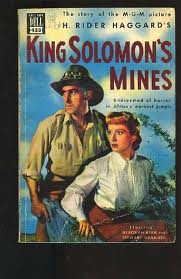
At that time, paperbacks were cheaply produced in huge quantities and displayed in drugstores, supermarkets, department stores. Some of the relatively small number of independent bookstores did not even carry mass market paperbacks, and if they did, they were in racks and spinners supplied to them by the wholesalers that controlled magazine distribution and therefore had access to retailer channels.
Mass market paperbacks were initially differentiated by being reprints of books that had come out first in hardcover, and because publishers knew they would compete with their higher priced new books, they simply held back mass market releases until the hardcover sale had run its course, usually a year, to be sure they harvested as much demand as possible at the higher hardcover price. Some titles, particularly those in genres like westerns, mysteries, science fiction and romance, were released in mass market first (or only), to feed the burgeoning demand of general readers for inexpensive entertaining books (which publishers differentiated, sometimes snootily, from the “serious literature” and nonfiction they saw as the core of their business).
Sound familiar?
Over time the “paperback revolution” grew to include a later invention, the larger and more expensive, better printed, “trade paperback” and now of course, mass market editions have significantly declined, mainly because their former mass merchant, drugstore, supermarket and airport store core outlets shifted their shelf space to higher margin products in other categories.
Today we are witnessing the advent of what is essentially, the first new book format in almost 75 years, the e-book (the audio books was of course, a new format but not for reading). E-books can create new markets for books in the same way that mass market paperbacks did. Readers who could not afford hardcovers, readers who found paperbacks more convenient, readers who were voracious consumers of books, all flocked to the new paperback format, just as they are doing today for e-books.
E-books are poised to create a new revolution of their own, certainly proven by current rates of sales on many titles. But one thing is different about e-books. At the outset of the mass market paperback revolution, books in this format were published under license by new companies or in some cases introduced new writers in categories that were underserved or not served at all by old line hardcover publishers, such as romance, westerns, mysteries and science fiction categories. These new publishers recognized their market niche as open but at low prices to take advantage of a new market that would simply not buy books at the higher prices commanded by hardcovers.
Today, e-books are being publisher for the most part, by the same publishers who issue the print versions originally. E-books are not seen as a “subsidiary” rights sale, but as an extension of the initial publishing strategy. Combined with their desire to preserve revenue against existing overhead in a business that was built for print, publishers are pricing ebooks much higher in relation to hardcovers and trade paperbacks than mass market paperbacks ever were priced. So we see many ebooks priced at $9.99 (the new defacto standard for many books it seems) and up.
Many smaller trade publishers, as well as authors publishing their own books and some new digital-only publishers are pricing their ebooks at much lower levels ($5.99 and down). If you look at ebook sales, it is pretty obvious that price is a huge driver for many consumers. At $3.99 (or better yet, $2.99 or even $.99), readers will often take chances on a new or emerging writer, or an established writer who might be new to them.
At $9.99 (or more) most readers will not take chances. The risk and reward don’t line up when reading time and money are precious.
All books are price sensitive of course, so publishers will reasonably argue that they do not want to race to the bottom, or devalue their authors’ works. Those are of course valid arguments in favor of keeping prices of ebooks more like hardcover books than the much lower levels that are equivalent to mass market pricing. 
(Supply and demand determine a product’s equilibrium price and quantity. Graph courtesy of Prof. Daniel Richards. Background image courtesy of Ken Hammond, U.S. Department of Agriculture.)
But I will argue that traditional publishers are missing the market opportunity created by the e-book revolution when they fail to create a significant price benefit for their e-books. Publishing digitally is in fact less expensive than publishing print books. This does not mean that every book should be digital only – readers have proved over and over again that they will buy print books when they feel the need to have a visible “souvenir” of their reading experience, a book in physical form, and many readers are willing to pay a premium for this version.
Just as equally, consumers have made clear that if books are inexpensive, they will buy and read more of them, taking on more risk and rewarding publishers and authors they like with a full measure of loyalty and commitment.
I think this means that publishers should now be thinking hard about ways they can reduce ebook prices and increase readership. Publishers who are willing to reduce prices will create a real “ebook revolution.” We can do this by pricing our ebooks low enough to broaden the market for books and reading, while our consumers reward us with higher sales and the kind of support and commitment that other media would be thrilled to have.
Authors also need to recognize that this strategy is in their best interests. With ever more writers seeking readers, it makes sense to use price to gain attention, as Amanda Hocking and C.A. Konrath and many others have bravely demonstrated. Now that we live in an attention economy, creatives in every media form need discovery and consumers’ time and attention even more than they need money from sales (in the attention economy, money follows where attention leads – and that is the subject of my next post on digital publishing).
I’d like to point out that my friend, the much admired Mike Shatzkin, has posted a new piece called “Ebooks are making me recall the history of mass-market publishing” which is more detailed and grounded in historical detail than what I have written here, and I recommend reading Mike’s piece for further confirmation of my views. Thanks also to Lou Aronica of The Fiction Studio for suggesting the original mass market paperback as the best way to think about ebooks today. 
Posted by David Wilk on 03/15 at 05:04 AM
(0) Comments •
Permalink
Is Print Culture Dying?
The cultural perception of the importance of print is changing rapidly, and that is what is truly important now.
Think of the length of time it took for cell phones to be viewed as "yuppy toys" to being a necessity for all. Cell phones are now ubiquitous across all cultural and economic segments of our society, and in most parts of the world.
It is so foolish to think that physical books are sacred. They’re tools for most people. Good tools. Excellent tools. Print culture has been a fabulous era of communication and intellectual, economic and cultural growth.
Yet it is only a small fraction of the world’s population that has access to, much less a love for physical books and the power they represent.
It is clear that digital reading is going to become ubiquitous sooner, much sooner than later – unless the world’s significant energy and environmental issues mean that access to electricity and batteries will be compromised.
But assuming that we solve our infrastructure and environmental challenges, the economics of printing, in the face of massive uptake of digital reading, will radically change the landscape of print culture.
Printing is a commodity business where quantity produced significantly reduces the unit cost of production. Conversely, smaller print runs and the migration to digital printing will mean that print books become more expensive, even as the selling prices of digital content are reduced by the explosion of content availability (abundance naturally pushes prices down) and by the competition for attention between digital reading content and all other forms of content, like film, video, games and music.
Furthermore, digital workflows and products are significantly more efficient than print workflows and products. Therefore publishers will embrace them without sentiment, and people who read will be forced to make economic decisions to buy digital products, with or without sentiment.
Print culture will never die because books have significance as physical objects. They are cultural icons. And there are occasions and purposes for the physical object to be higher and better than the matching digital experience. Commercial printers and manufacturers of printing presses will do everything they can to drive print costs lower in the face of digital competition, and they will succeed in slowing the worldwide transition to digital publishing technologies.
But to believe that print culture can withstand the wave of change brought on by digital technologies flies in the face of our experience of technology and the speed in which humans adapt to new technologies.
Print culture will persist the longest in places where it has been the strongest.
But it is certain that print culture will ultimately be replaced as the predominant paradigm for communication of words by a new form of culture based on digital content delivery, sharing and consumption. And much sooner than we now believe.
Posted by David Wilk on 11/19 at 07:21 PM
(0) Comments •
Permalink
A Focus Group of One?
If you’re in the publishing business, in all likelihood, you have never used market research, you have never run a focus group, and you have probably never utilized industry wide sales statistics to make a decision about any aspect of publishing a book.
In fact, publishers, editors and even book sales professionals seem proud of the standard methods of decision making in the book industry. How many times have you seen a book cover decision made by one person? Or over-ruled only by another tiny set of responses, maybe one or two book buyers, a couple of sales reps, or maybe a favorite bookseller? Similarly, how often are decisions about strategy made based on personal experience – “I don’t know anyone who reads a book on ____(name your platform)” for example? Or “there aren’t any readers for this book in ____(name your city)” for another example?
Aside from looking at the performance of comparative titles (which never seem to really match your book anyway) or making a price decision based on a quick survey of the competition, not much research ever seems to happen in the publishing business. We don’t talk to readers aside from our friends at dinner, we don’t research what people are reading, what they think about prices, formats, marketing techniques, retail displays, customer service, etc.
Of course, most publishers don’t have any significant contact with readers in the first place.
How about research, really deep and meaningful research about the role of reading in society, where people buy books, how many people go to libraries every week, how do professors choose books for course adoptions, how many students out of a given number in a class actually buy or read assigned books?
How many people give books as gifts and how do they choose what to buy?
So many questions that arguably only a few people in the book business know anything about. And what is really interesting is that so many people in the book business either don’t care, or are proud of not doing research, market or otherwise, as part of their company’s mission. They base decisions on what they like, or what they see riding home on the train, or what people they socialize with tell them at dinner parties. And they dismiss market research as either unaffordable for publishers or the wrong approach to a creativity based business.
Of course, the art of writing does rely on the creative spark of creators, but publishing is the business end of a creative process, and business needs information!
So what is wrong with this picture?
I recently came upon this quote by Jeff Bezos (in conversation with Charlie Rose):
"Before if you were making a product, the right business strategy was to put 70% of your attention, energy, and dollars into shouting about a product, and 30% into making a great product. So you could win with a mediocre product, if you were a good enough marketer. That is getting harder to do. The balance of power is shifting toward consumers and away from companies...the individual is empowered… The right way to respond to this if you are a company is to put the vast majority of your energy, attention and dollars into building a great product or service and put a smaller amount into shouting about it, marketing it. If I build a great product or service, my customers will tell each other."
And that’s true enough. But if you don’t understand who your customers are and what they want, like, and appreciate, how will you be able to create and present them with products that resonate and that they will be willing to buy from you?
Knowledge = power. Knowledge comes from meaningful research. We must always celebrate the inspiration and creativity that lie at the heart of the creative process, in fact the publisher’s passion for finding and publishing books and believing deeply in them is their core value add as businesses.
If publishers paid more attention to finding and publishing work they truly love, while at the same time embedding an understanding of the cultural zeitgeist in their publishing processes, it is almost certain that they would be less worried today about the future of books and reading.
Posted by David Wilk on 10/23 at 04:07 AM
(0) Comments •
Permalink
Another New Publishing Model Emerges
Everyone knows that this is a time of great flux. Experimentation and innovation therefore abounds. It’s disconcerting and even painful for many of us, as existing models and structures cease functioning and abruptly disappear, and new unfamiliar, untested forms then arise almost daily to challenge established order and expectations. But new ideas do create tremendous opportunity, and I am not the first to say that we need the experimentation and sometimes wild risk taking that marks a culture in flux. Many new ideas are coming from technology savvy entrepreneurs, as part of a new wave of web centric startups scrambling to gain attention. And as Kevin Kelly has recently observed, writing may be giving way to a culture of "visualizing" as screens become the predominant communication device in the culture. The very definition of what a book as container is certainly going to be challenged in coming years. But even as the culture changes, and the forms of distribution are altered, certain underlying principles remain. I had the pleasure of listening to Tim O’Reilly speak at a publishing gathering recently. His message to publishers was overtly to "do something that lights you up." For most publishers, this means identifying great writing that really turns you on, working to make it ready for an audience (editing and presentation), connecting the work to readers. Those are the essential activities of a publisher (as I have said before here, we need to remember that the root meaning of "publishing" is "to make public", which is a tremendous responsibility the publisher has to the creator). Adhering to the basic principles of what it means "to publish" is a pretty great way to go forward into the future. My good friend Lou Aronica has been an editor and a publisher for many years, and is now also a successful published writer. He has just announced the launch of a new business model he is calling The Fiction Studio Imprint. Here is some of what he has to say about this new venture: The Fiction Studio imprint will be the home for very good writers who have as yet to win the lottery. It is an invitation-only publishing program – I consider no submissions – for writers whose work I love who have decided to try a different path to publishing success. Fiction Studio will publish these books in both paperback and e-book formats (there will be the occasional hardcover as well), the writers will have a huge level of equity in their publications, and because of this, they will participate in their publications at their highest possible level. I am putting a premium on professionalism with this imprint. The books will look great and they will have extremely high editorial values. While I learned a long time ago that readers don’t care about imprints (no one goes out looking for a Viking book, for instance), I want the Fiction Studio imprint to tell readers that they can rely on the quality of the work. Everyone associated with the program – from the editors to the copyeditors to the cover designers to the marketing and publicity people – have many years of experience at major publishing houses. The very first book in this program is my own novel, Blue, which you can read about here. In fact, the Fiction Studio imprint arose from my deciding that I wanted to create a new way to publish my own fiction. After researching a number of options (including the option of making a deal with another publisher), I landed upon the structure that will serve as the business model for the imprint. While one could argue that launching a publishing program with one’s own book is a tad narcissistic, I’m doing it because I believe completely in the approach the Fiction Studio imprint offers and I want everyone to know that I’m so committed to it that I’m willing to put into the program a novel I worked on for years and which is closer to my heart than any fiction writing I’ve ever done. I’ll be watching Lou’s new program closely - I think it will be an important and valuable experiment, one of many of course, that will help to redefine publishing in the modern era. 
Posted by David Wilk on 10/06 at 05:20 PM
(4) Comments •
Permalink
I Tweet iPad: Why technology matters to writers and publishers
I’m recommending that every writer and publisher should buy an iPad and start exploring the Apple App Store in order to understand why technology matters so much to writing and reading.
I’m also recommending that writers and publishers create Twitter accounts and begin to spend some serious time learning how it works.
The iPad is a device, of course, and Twitter is a web-enabled communications system, but both are seriously affecting the lives of millions of people all over the world. I hear writers and publishers dismissing technology like the iPad and iPhone, and communications innovations like Twitter and FourSquare all the time.
I know that technology is not working for everyone. And I also know that there is a huge economic divide in the world – the real division of haves and have-nots is now defined by access to technology. And I’m not even positive that technology is not driving human beings to the literal eve of destruction. It’s quite possible that instead of writers learning how to transform their work to the iPad and communicate to readers via Twitter, we should all be writing about the murder of our planet by a culture that cannot see any other relation to the natural world other than exploitation.
But on the other hand, the iPad is a mind-opening device that enables huge creativity, and Twitter is a phenomenal tool for communicating. Aren’t these both the kinds of things that writers and publishers need?
Posted by David Wilk on 08/05 at 06:52 PM
(31) Comments •
Permalink
What is Freedom of the Press in the Electronic Book Era?
Freedom of the press belongs to whomever owns the press. Which was, at the time words were physically applied to paper by printing presses, another way of saying that the only way you can be guaranteed to speak your mind and be heard is to control the means of production.
In the modern networked world, this means that freedom of the press belongs to whomever owns the delivery system and ultimately, the customer relationship.
Publishers used to bump up against printers who had different values than they did, and were sometimes told that the printing company would not accept the job. That was the printer’s right, and the publisher’s response then was to find a printer more willing to print unpopular or even unappealing words or images on paper. This made sense, of course, only because there was a reasonable number of printers competing for work.
A similar situation exists today, except the "presses" are devices and networked delivery systems, Amazon and Apple being the two most obvious. However now, if you want to publish electronic books, you’re pretty much at their mercy.
If being a “publisher” is defined by the act of making written works public, then is it possible to be a publisher without distribution? Obviously not, otherwise the publisher is no better off than the creator.
In the electronic content environment, distribution is determined by the entities that own the customer relationship, i.e., the means to reach them. Doesn’t that make publishers dependent on Amazon, Apple and to a smaller extent, the other myriad of niche sites where readers are willing to give up their credit cards and private information in order to be able to safely download content?
Freedom of the press belongs to any publisher whose technology enables readers to access that publisher’s work. No publisher has that freedom today, nor does any author. Are there sufficient protections for publishers, authors and readers to guarantee that freedom of expression will actually exist in a digital publishing environment?
Recently, as part of the battle over pricing and terms, publishers have found themselves pincered between Apple’s terms for the new iPad based iBookstore, and Amazon’s terms for doing business with their currently dominant Kindle store.
Publishers who thought that Apple was their savior are learning that it will not be that simple.
The story has not yet fully unfolded, but it appears to me that publishers and authors are soon going to learn the extent of their weakness in an arena where larger entities own the roads they need to travel to reach their customers.
Can we trust the market to protect 1st Amendment rights? There’s no evidence that large corporations value freedom over profits. We may need to rethink the rules that apply to near monopolies in the electronic distribution environment, and it is very possible that only the threat of regulation will ever cause Apple and Amazon to tread more lightly when it comes to doing business with writers and publishers.
Posted by David Wilk on 03/23 at 04:55 AM
(81) Comments •
Permalink
Give the Customers What They Want!
If you have not heard that in today’s world the customer is in charge, then you probably have been either living under a rock or working too hard just trying to make a living. Of course we are all customers ourselves, and as customers, we know exactly what we want. But getting and giving are two different things, and when we are serving our own customers, and trying to make a profit at the same time, it doesn’t look so easy anymore.
There has been plenty of talk in the past few years about the rise of the Customer. Crowdsourcing, Opensource, Customer Centric Marketing, the work of Seth Godin and many other Web 2.0 thinkers, David Meerman Scott’s excellent book The New Rules of PR and Marketing, are all examples of a new kind of thinking and understanding about how businesses must relate to customers. Or perhaps more properly, how Customers have become King.
But talk, as they say, is cheap. I learned a great deal from working on a book project with the aforementioned Mr. Scott, another really excellent book about learning to listen, called Tuned In. Brought on to work with the authors and publisher, I unwittingly displayed a singularly unenlightened view of this new style of marketing on a regular basis. It was a humbling experience for me, as I have thought of myself as a customer centric thinker for a really long time.
I regularly read a newsletter put out by Mark Hurst, called Good Experience. He is a terrific writer and thinker about Customer Experience, among many other interests he has. In his January 7th newsletter, he went straight to the point, and I felt it was such a good piece of work, I wanted to bring it forward to my own network of friends and colleagues.
I asked Mark for permission to quote extensively from his newsletter, which he kindly gave me. A link to his website appears at the end of this essay. I highly recommend you visit, subscribe to his weekly email newsletter and delve into the resources he provides.
A key point Mark makes that should be obvious, but of course never is: “Customer experience is really easy to understand. You just have to be willing to keep it simple.
It all starts with this. There are two parts to customer experience: the customer, and the experience.”
That’s Lesson Number One! Another seemingly obvious point, to be remembered as a mantra:
“The CUSTOMER is a person. A human being. Your neighbor, your aunt, your postman, your car mechanic, your librarian. This is a person who deserves to be listened to, not just "monetized" or reduced to a number in a database somewhere in the cloud.”
That’s Lesson Number Two!
“The EXPERIENCE is everything that happens to that person as they interact with your company. It all comes to them as *one* experience. Your company might have five silos or three operating units or eighteen warring factions, but for better or worse they create just one experience for that customer.”
That’s Lesson Number Three! In sum, it all comes down to the customer and the experience.
Now we’ve pounded these lessons into our numbed skulls, we can go on:
“Now, the next step is to create a *good* experience, and for that you have to do two things:
1. Treat the customer as a human being (i.e., listen to them).
2. Look at the experience from the customer’s perspective (i.e., empathize with them).
In other words, to create a good experience, just act in response to the ideas above: the customer is a person, and the experience is the one single everything that happens to them.”
Could this be any easier? One wonders. If it is so easy, why do so few companies succeed at creating truly wonderful customer experiences? We all know how to provide them, we all know it when we experience them. How hard is it? Very hard it would seem. My favorite line from an early Who song comes to mind: “The simple things you see are all complicated.”
As Mark Hurst says, it really is simple. But I think today, in order to provide a truly good customer experience, we have to change the way we think, even the way we talk about our business relationships. The language of marketing, the practices of selling, even the processes of publishing themselves, are often hierarchical, top down, “I have built it, now go out and sell it” kinds of operators. We need to change all of that. As Mark says, empathize with your customers. Once you understand who they are and what they are looking for, it will become much simpler to create experiences that truly engage them.
Quotes above are reprinted with the permission of Mark Hurst of Good Experience.
Posted by David Wilk on 01/22 at 07:37 PM
(68) Comments •
Permalink
What Were They Thinking?
Such great device names: Kindle. Nook. Blio. Ectaco JetBook Lite. Spring Design Alex. Txtr. JournE. Skiff. Cool-er. Plastic Logic Que. iRex. Pixel Qi. Bookeen Cybook. eSlick Reader. Astak EZ Reader. BeBook. Not exciting enough for you? How about the oh-so-brilliantly named Sony Reader?
Most of these names are flat out horrible. What were they thinking? These manufacturers are not only trying to build their brands in a crowded marketplace, they are trying to create a new market for a new generation of devices against a well established device that does not require electricity to operate, has a long history of appealing to consumers, and a brand known and recognized by millions of consumers. The book. Perhaps it should be referred to now as “POBs” (plain old books) the way landline telephones are called “POTs” to distinguish them from all the modern alternatives).
What were these manufacturers thinking? How about hiring someone who specializes in modern product naming instead of asking your grandmother or your nephew to come up with something “cool.” Even relatively poor naming choices in other technology fields and consumer products are better than these pathetic nominees. It’s difficult to get consumers to lay down hard cash for new technology when their current tech products work pretty well. Since POBs work really well for most people, and they have tremendous psychological attachments built into them (not to mention sentiment and practicality), e-reading devices are fighting an uphill battle for consumer acceptance.
When they have great names, as well as great features, products become more than devices, they can become objects of desire, objects if status, in short, they become meaningful brands. Who in our country has not heard of the iPod, even if they don’t care for Apple and will never buy one? Who has not heard of Google? They beat Yahoo on more than their name, but there is no doubt that the name contributed to their ascendency.
I think “Nook” has to take the cake as just the worst consumer product name ever. It’s stupid and makes me think of hiding in a corner of a church or a basement room. And generates the typically stupid jokes about “getting some” as in ‘nookie,” which is really great considering that more than 70% of books are purchased by women.
OK, Barnes & Noble has never been a consumer product manufacturer before, but come on, if you are going to play in a new business sector, why wouldn’t you learn the rules of their game? And granted, the book business has never paid much attention to consumer marketing, I’d expect more from a smart retailer like B & N. And hint to whomever there is in charge of this project – just because it sold out its first shipment, that does not mean you named it well. For the inevitable “Version 2” please consider a name change!
I have to say that the “Kindle” is not much better. When Amazon first announced it, there was a lot of snickering about this moniker too. Kindle of course evokes kindling, which we use to build a fire, which is maybe OK as it implies getting something off the ground, though a fire that burns widely is not something good, and kills a lot of trees (maybe that was the idea here – Kindle will kill trees so print books can’t be made anymore?) But of course, kindling is itself made of wood, so who knows? Either way, the name Kindle suggests nothing to do with books, or reading, or imaginative experience of any kind, and it doesn’t exactly spur us to want the device, so I continue to wonder, what were they thinking?
“Blio” sounds like a cartoon character and a failure at that. I can’t even think of a good joke related to how it sounds, which is pretty sad. “iRex” sounds like what a five year old kid tells his parents he has done to his room.
Que might actually be an OK name, but of course it’s not for sale yet. iRiver has created an intriguing machine called the “Story” but it’s not for sale in the USA yet. And there are any number of Korean and other obscure machines out there with equally obscure names.
What were they thinking?
People do like their gadgets these days, and more people than one might have imagined seem ready for an electronic device that allows them to stop killing their shoulders and backs carrying heavy bags full of books. I know that the target market for e-readers is not the hip youth of America, they’re reading on laptops, desktops and cell phones at a rate that boggles the mind. It’s the baby boomers who are flocking to e-readers everywhere, at least initially selling out Barnes & Noble’s buggy and slow Nook and enabling Amazon to claim that they are now selling nobody-knows-how-many-but-a-whole-lot of e-books (according to the ever effervescent Jeff Bezos.)
Imagine how many more devices could be sold if someone came up with a really cool name. OK, “iPhone” is taken and so is “Droid,” but there has got to be a great technology with an equally great name on the horizon. I hope someone is thinking of it now. My money is on Apple and Google, two companies who live and breathe technology and its applications to real people’s lives.
Oh, and while you’re at it, how about making the device we’ve all been waiting for too? PS- Huffington Post’s humorous quick post on the Nook and Kindling names here.
Posted by David Wilk on 12/16 at 10:17 PM
(79) Comments •
Permalink
|
Buzz, Balls & Hype
MJ Rose’s excellent blog Writerscast Where I podcast interviews with writers and thinkers about books, publishing and the future of culture. Ron Silliman’s Blog
one of my favorite and most regular visits Michael Hyatt, CEO of Thomas Nelson Publishers
Incisive, intelligent blog well worth bookmarking! Publishing Insider
The renowned Carl Lennertz covers the book business and more Fresh Eyes Now
Robert Gray’s consistently interesting bookseller’s journal Book Slut The Long Tail
Chris Anderson’s ongoing exploration of how the web and human behavior creat new opportunities for information to be distributed (my words) Galley Cat
Blog about the bookbusiness Conversations in the Book Trade
interesting site Flaming Grasshopper
Chelsea Green Press’ ongoing blog Publishing 2.0: the (r)Evolution of Media
A blog about the (r)evolution of media, driven by the migration of media to the Web and new digital technologies by Scott Karp. Highly recommended. E-Reads
An e-book business site, but their blog covers book business stories as well. The Digitalist "The Digitalist was originally conceived as an internal sounding board, discussion forum and blog for the publisher Pan Macmillan to start thinking about a range of digital issues it faced. It still is. Only now it’s open for everyone to join the debate about books, publishing, the web, and the future." Highly Recommended reading for anyone interested in the future of publishing. Teleread "Bring the E-books Home" David Rothman’s outstanding blog covering all things related to e-books, now with the assistance of Paul Biba. Invention Arts Really smart people thinking hard about books, publishing and the emerging social conversation. Creators of Aerbook: an author platform service for the social web. Highly recommended. |


