|
Make your own books with Pressbooks

Pressbooks, created by Hugh McGuire and his Book Oven team in Montreal, is an elegantly implemented platform for authors who want to make their own print and ebooks, and for publishers who need to build an integrated production workflow. Built on the now ubiquitous Wordpress engine, Pressbooks is one of the easier production tools you will find. That does not mean it is simple or trivial to turn out well formatted files, but with a bit of self education and some attention to the history of book design and layout, it is very possible to use Pressbooks to build your book files, with output to epub, mobi (Kindle format), and most remarkably, print ready PDFs with all elements of your book properly formatted. Pressbooks handles illustrations, footnotes, and much more. And for those of us who are too busy to learn how to do it ourselves, for a very reasonable fee, Pressbooks will build your book for you. At Booktrix, we produced the excellent business book, True South: Leadership Lessons from Polar Extremes, using Pressbooks; this is a book that includes a large number of photographs, maps, and charts, all challenging to layout and page design. There is excellent online support and a fine team of book builders who can assist. For authors, Pressbooks has a great advantage - the cost is very low and they will also handle distribution to the self publishing platforms for you, taking zero percent of your revenues. They make their money on book production only, a very fair model. An author who does not want to learn the inner workings of book design and layout might hire a designer at a reasonable rate who can then handle production on Pressbooks, making the cover art, and insuring that all the book elements are present and accounted for. For businesses that publish as part of their work - and there are literally hundreds of thousands who do - Pressbooks might be an ideal solution, providing your communications professionals with book-specific tools and expertise to make your content shine. At a price of less than $100 US to produce a book, it’s a easy way to get started producing professional quality books in print and digital formats. As you can tell, I am a fan of this software. I am not alone. Here is a comprehensive review of Pressbooks by Bitlit. I am always happy to advise clients who are interested in determining what is their best path for publishing success. Feel free to be in touch with me. 
Posted by David Wilk on 06/07 at 08:29 PM
(0) Comments •
Permalink
International Declaration of Independent Publishers 2014
Created by International Alliance of independent publishers - We, 400 publishers from 45 countries, meeting in the framework of the International Alliance of Independent Publishers at our Third Assembly, held in Cape Town (South Africa) in September 2014, reaffirm our will to act together to defend and promote bibliodiversity. Here’s the Preamble The book is essential for building and spreading knowledge, in the shaping of a human being and development of a critical mind. It is not simply a commodity. As a cultural asset, it forms part of a certain kind of economy which should not be subject to market forces exclusively. Its design, production and marketing, whether in print or digital format, should enable a book to last, since it is intended as much for future generations as for those in the present. You can read the full document here. Organization’s website here. “Translation and Globalization”, the new issue of Bibliodiversity here.
Posted by David Wilk on 11/30 at 06:38 PM
(0) Comments •
Permalink
The Impatient Reader
Fred Seibert and I started Frederator Books in early 2013 as a digital-only publishing venture. Our focus was then, and remains now, to create entertaining books in digital form aimed at kids from the very young through ages that are (still) called “young adult” but really mean “readers of any age who want to have fun reading books.” So far in just more than a year of doing this, we’ve produced 30 books and have plans in the works for at least another 60 in the year to come.
As an in-house publishing laboratory connected to a successful animation company, we felt it was crucial that we be open to all sorts of new ways of thinking about books, while at the same time honoring the immersive reading experience. We have the unique benefit of learning about how young people are consuming media from the experience that Frederator Studios has with its wildly popular YouTube series, including Bravest Warriors and Bee and Puppycat, among others.
Bravest Warriors has had more than 21 million unique viewers and Frederator’s Cartoon Hangover network has over one million subscribers. After Bee and Puppycat launched in 2013, Frederator created the most successful animation Kickstarter campaign with over 18,000 individual contributors. So Frederator Books has had some great teachers.
We are certainly not alone in noticing that media consumption patterns have been radically changed over the past few years. DVRs have enabled people to watch television when they want to, and the rise of serial storytelling on cable networks shows that people love episodic story telling, with long arcs that can involve them over varying periods of time. Everyone is now familiar with the term binge watching.
But we also know that kids have been binge watching for years, and YouTube’s success is simply an indication of how deeply we are all committed to experiencing content in massive doses.
Consumers of all kinds of media are impatient. When we find a story, a show, a character we love, we want to experience more of them, and we don’t want to wait for more. Romance publishers and authors have learned their readers will consume new books like candy. Some romance readers read over 300 books a year! That demonstrates a real commitment to story.
While serial publishing in weekly magazines was once common, as books became standalone commodities in the twentieth century, publishers began to take their time to make books. Thus “slow” and “deliberate” became values publishers adhered to without ever questioning whether there could be a better way. Books often take as long as a year to two years from completion of manuscript to the delivery of final books. It’s true enough that editing takes time, along with typesetting, page layout, and cover design, but many publishers have demonstrated that production can be accomplished more quickly than this, and utilizing a purely digital workflow, books can be delivered much more quickly today.
Indeed, slow and deliberate may have been valuable characteristics for publisher operations in the past; publishers also convinced themselves that books “needed time” and that being slower in production time compared to newspapers and magazines was a benefit and a strength, producing books that were carefully written, edited, and marketing planned in advance, to make books thoroughly ready for market.
Retailers supported this deliberate publishing pace by telling publishers that if they did book sequels or books in series, to not issue new books too quickly, give the market time to develop and keep readers waiting for the next new book. Readers may have been dissatisfied with this situation but had no way to communicate their discontent. Any parent can confirm that children, in particular, cannot understand why when they love a character, there can’t be as many books for them to consume as they want – and we agree with them.
In a high speed interconnected culture, we don’t think slow to market publishing works very well anymore, even for print publishers, and as e-publishers, we want to be able to fill reader demand as quickly as we possibly can. Readers want the same flexibility and speed from reading experiences as they can get from a video watching experience. Our books are issued in short form when they are new, and then gathered into collections to suit our customers’ reading requirements once the story line is complete.
As book publishers, we believe that e-publishing gives us the unique opportunity to change the dynamic of how we relate to our customers. Books can be ubiquitous. We can read on our cell phones at the grocery check out, and later in the evening on an iPad, and maybe before going to bed on a dedicated reader, and all will be synchronized at all times. Content should be scaled to any screen size. And readers should be able to engage directly with the creators, telling them what they like or don’t like about their books, and enabling them to change their storylines and character development as their stories unfold, based on reader communication and engagement.
In fact, we are just as impatient as our readers are. We want to know what they are thinking and we want them to talk to us. Thus, everything we do is built around the idea that we are here to create delight, fulfill readers’ desires, and tell stories that engage them, whatever age they might be. It’s a rule to which we have so far adhered quite closely, that every project we take on should be episodic or serial in nature, so we can produce books just the way television shows produce episodes – books that are always immersive reading experiences that will reward readers’ impatience with hours of reading pleasure. Will the Frederator Books approach and what we learn about our readers and how they consume our eBooks serve as a model for other publishers? We think it will. Note - an earlier version of this piece was published March 5, 2014 by Publishing Perspectives
Posted by David Wilk on 04/27 at 07:50 PM
(0) Comments •
Permalink
Is the Amazon Book Review System Broken?
Amazon customer book reviews have become an extremely powerful tool for the giant retailer. Crowdsourcing book reviews provides Amazon masses of free content, allows readers to participate in the bookselling and reading experience, and clearly helps sell a lot of books, giving Amazon yet one more advantage over bricks and mortar stores and even other online retailers who have been slower or less able to get their own customers to do the same. Of course, since customer reviews have become so important, the system has been frequently gamed – many authors and publishers (and especially online marketers) quickly saw the benefits of having a large number of positive reviews for their books, and either got their friends and family members to write reviews, or went much further. Some less ethical souls have created fake reviews under other Amazon accounts, or asked employees to make it a part of their jobs to contribute reviews for company published books. And seeing a business opportunity, a number of entrepreneurs have created "paid review" businesses where anyone can get positive "customer" reviews posted to Amazon for a fee. Over time, customer reviews have become integrated into the Amazon ecosystem. Amazon search results are based in part on the number and quality of customer reviews, and their search algorithms promote books with large numbers of positive reviews, creating a powerful network effect, where a large number of positive reviews not only signifies meaning, but can serve to drive sales geometrically. How can anxious authors (and again some publishers) resist addressing the need to find a way to acquire large numbers of positive reviews, simply to avoid becoming lost in the Amazon shuffle? No amount of begging your fans will get enough reviews for your books. And very few writers and publishers have large enough networks to draw significant customer reviews over and over for every book they write. How do we deal with the fact that unbeknownst to most Amazon customers, thousands of so-called customer reviews were written and posted for pay? And there are other potentially damaging behaviors that have arisen in the customer review system at Amazon, including authors writing negative reviews of books that were competitive with their own, or readers (perhaps shilling for other writers and publishers) giving one star reviews to books for illegitimate or irrelevant reasons, thereby unfairly damaging the sales of certain books. Recently a jilted lover went on a campaign to give multiple one-star reviews to a writer. Amazon knows it is bad for everyone if even some writers are known to buy reviews. In 2012, after a number of stories ran in national media, including the New York Times, the company tried to address the issue of paid reviews (as well as the related practice of targeted negative reviews aimed at competitive books) by banning not only paid reviews, but any review written by anyone with a perceived conflict of interest, including all authors and employees of publishing companies. This broad stroke approach has not worked very well. There are innumerable stories of perfectly legitimate reviews being removed from book pages by Amazon, and thousands of paid reviews still pervade the Amazon bookstore. Authors reviewing other authors’ books has long been an accepted practice and now many authors wonder why all peer created literary reviews are simply disallowed. Meanwhile, unethical writers have found new ways to salt their review collections. And there are still plenty of bullies using the power of the one star review to drive down book visibility and thus sales. The system of crowdsourced customer reviewing is at best a gathering of human beings that shows the power large numbers of people working together in community are capable of achieving. Unfortunately, crowdsourcing also fosters the illusion that self-regulating systems will bring peace and harmony to all. As soon as the door is open wide to everyone, along come those few individuals whose behaviors fracture the belief that purely unmanaged communities can conquer the dark side of human nature. An abused (and sometimes abusive) system, especially one that was created for good purposes, needs to be managed. Amazon has benefitted immensely over the years by creating a socially driven system that has engendered the vast quantities of book related content to drive reader engagement and book sales. But now so much has gone wrong with the review system, it’s time for Amazon to step up and put more resources to bear on supervising and controlling the review system. It’s going to be a tricky thing, as the latest uproar at Amazon-owned Goodreads demonstrates. Goodreads faces similar issues with managing its millions of members. Recently, Goodreads announced it would remove offensive reviews (“we recently recognized that we can do a better job enforcing them [their tenets], particularly in the small number of situations where tensions start to run high. We took a long, hard look at our guidelines and how we moderate Goodreads and identified some areas where we can be clearer and where we can improve.”) Managing community is no easy thing these days. For Amazon it’s not going to be enough for them to simply enforce their regulations. Customer reviews have too much power, and Amazon is too monolithic and opaque in its relations with authors and publishers. Amazon is famously and brilliantly customer centric. Now it’s (past) time for Amazon to engage with its author and publishing community just as intelligently and creatively as it does with customers. Links: NY Times: Give Yourself 5 Stars? Online, It Might Cost You GigaOm: Goodreads’ growing pains: Attempt to curtail author bullying angers many users Hugh Howey: Very Small Rocks? Zon Alert: Amazon Alert: Your Guide to Unethical Authors Amazon Book Review Guidelines The Guardian: Why Amazon can’t win when it comes to book reviews
Posted by David Wilk on 10/02 at 05:29 PM
(0) Comments •
Permalink
What Happens When Everyone Can Publish
My good friend Mike Shatzkin (The Idea Logical Company) recently set forth a compelling rubric to describe what is happening in publishing now that digitally publishing books and other written content can be done by virtually anyone with interesting content. Mike calls this the “atomization” of publishing. He’s aimed his analysis at publishers to help them understand what is happening all around them, and also to help them crystallize their own thinking about what this explosion of publishing means for them and for their businesses, both now and in the future.
I’ve been thinking about Mike’s concept a lot, and think it can be refined just a bit. The atomization of publishing is a key part of the molecularization of communication.
Traditionally, publishing of all kinds requires the organization of complex activities into structured businesses, reflecting the challenges of creating products for sale and distribution in the physical world.
In a digital communications environment, “publishing” (“to make public”) can be made significantly simpler. Yet, as most of us who have worked in publishing know, the digital publishing process still requires a considerable amount of organizing of resources, especially if you want to do more than to reach a tiny number of readers.
The chemical metaphor is apt. Atoms are the most basic components of matter. Molecules are next up the chain, and then increasingly complex amalgamations of molecules make up living organisms (and non-living matter as well).
Following this conceptual framework, I’d say that self-publishing authors are, as Shatzkin says, like atoms, while businesses and other organized entities that publish are more like molecules. It’s likely we will soon see some of these simple molecules joining together to form compound complex molecules, either existing alongside, or themselves joining the more complex and organized compound entities like publishers and distributors.
Clearly there is a wide range of highly structured and organized entities in the publishing communications ecosystem. Book and magazine publishers along with their rapidly evolving distributors and wholesalers are the most organized components in this system.
Self publishing authors are really the building blocks of content. They can operate on their own and likely will form molecular organizations between them. Like atoms in the physical universe, authors are mobile and will frequently join each other to create different kinds of molecules. The businesses, nonprofits and other larger forms that now can publish content that they create and own are more complex molecules – and sometimes like compound molecules - that as they grow and evolve can take on both the roles and structures of existing organisms – what we know today as publishers.
And in this continuously evolving chemical soup of modern communications, it is certain that new forms and combinations of publishing entities will emerge. All involved will adapt or die. (thanks to Joe Esposito, Jack Perry and Carolyn Pittis for reading this essay in various forms, and for helping me clarify my ideas)
Posted by David Wilk on 06/22 at 03:02 AM
(0) Comments •
Permalink
If You’re Stuck Try Automatic Writing
Writers and artists are not the only people who sometimes find themselves stuck, unable to unleash the creative impulse. Most of us have to write something important during our work careers, we have to create a big presentation, write an evaluation of an employee (or a colleague or boss), or make a brilliant and original marketing plan for our biggest client. There are times when we have to do something creative in our personal lives as well.
Somehow, it’s at these most critical moments that we are most often stuck, and unable to either write or create the thing that is so important to us.
Many writers and some artists employ strategies or tricks to either break through or simply go around whatever is causing a writer’s block. One of the best I have found is automatic writing or drawing, a technique developed initially in the Dadaist movement in the early twentieth century. For Dadaists, automatic writing or "automatism," is a powerful way to break out of the conventions of bourgeois art that impede a direct connection to the irrational creativity within us.
This form of creation has since been adapted and integrated into art and writing practice by many other artists, including Andre Breton, one of the leaders of the French Surrealist movement of the 1930’s. His book The Automatic Message (1933) is an important theoretical work about automatism and automatic writing in particular. Artist and writer Julia Cameron, author of The Artist’s Way and many other books about art, writing and creativity also employs automatic writing techniques in her work.
For many writers and artists, automatic writing is a way to unleash the unconscious mind, and to unblock the editorial thinking of the conscious mind that places barriers between the wellspring of creativity its manifestation in art and writing.
In principle, all of us can tap into our inner selves to the place where inspiration and pure creativity lives within us. Using the tools of automatic writing is a great way to break through whatever your mind or psyche is doing to prevent you from the creative work you want or need to accomplish.
The simplest exercise to try, whether for writing or drawing, is to put your pen down on the paper, and start writing or drawing whatever comes to mind, and following your "stream of consciousness" go wherever the words or lines on the page take you. Do not allow your rational editorial voice to stand in your way.
Accept that anything you create this way has or will have value to you, regardless of the "quality" of the work. You’re not creating a product! Just let the words or art flow from within. Write or draw for no less than 15 minutes. If you do get stuck at any point, just write the same word over and over until a new word appears. Enjoy the moment, savor the words you hear passing through your mind, or the way the lines you draw flow across the page. Allow yourself to get lost in the moment and be as close to your creative voice as you can possibly be.
When you’re done writing or drawing, just stop. Don’t read or look at your output for at least 30 minutes. Then come back to what you created and see what you did. If you’re lucky, you won’t recognize the voice of the writer or the hand of the artist you were while you were creating, and you will be amazed at what your inner self has created.
Doing automatic writing or drawing (or painting) at least once a week is a great way to keep your creative self active and in practice. Many people work out their bodies one or more times a week as a way to keep their muscles in shape. Your creative self is no less in need of being exercised and in shape. And if you regularly exercise your creativity for the pure joy it brings you, then when you need to do creative work, you’ll be ready, and your creative self a lot more willing and able. 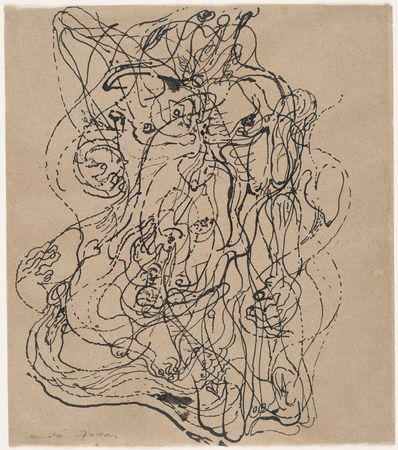
Posted by David Wilk on 05/27 at 03:34 PM
(0) Comments •
Permalink
The Wisdom of Mickey Rivers applied to Writing and Publishing
“Ain’t no sense worryin’ about the things you got control over, ‘cause if you got control over ‘em, ain’t no sense worryin’. And ain’t no sense worryin’ about the things you don’t got control over, ‘cause if you don’t got control over ‘em, ain’t no sense worryin’.”
—Mickey Rivers (former NY Yankees baseball player - and author of "Ain’t No Sense Worryin")
Aside from the fact that this is just great advice for any of us to live by, it’s well worth thinking about how baseball player Mick the Quick’s great common sense approach to life applies specifically to writing and publishing.
What do we control? For writers, it’s the books you write and for publishers, it’s the books we publish. For both, we also control what we say and do to support the books when we are trying to persuade readers to give us some of their time and attention.
In other words, we only control the work we do ourselves. Don’t worry about anything else, just do the best work we can. Why spend our valuable time and energy worrying about the so many things we can’t control?
Bookstores are closing and shelf space for books is declining. More people are writing more books than ever before in history. Books have to compete with online reading, billions of YouTube videos, mindless web surfing, oceans of emails, RSS feeds, apps, movies, games, blogs, texts, tweets and oh yeah, life itself.
Finding readers who will pay attention to us is harder than ever. Whatever happened to book reviews? They’ve been replaced by reader comments, discussion groups, and comments to blog posts. Just when we thought something new and different had come along, Amazon buys Goodreads.
What, me worry?
Seriously, MIckey Rivers is right. Writers write. Publishers publish. Readers? Ain’t no sense worrying about readers - bless them - we can’t control ‘em. 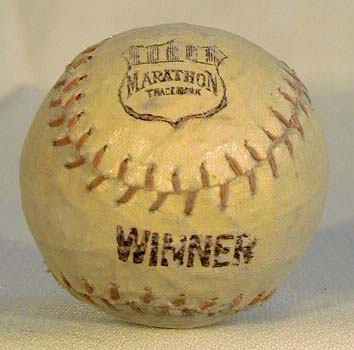
Posted by David Wilk on 04/02 at 04:13 AM
(0) Comments •
Permalink
Marketing Advice for Writers (and Publishers too)
"There is no magic button to build your audience."—Dan Blank
"So it all comes down to relationships. Do you have a relationship with those you’re selling to?"—Bob Lefsetz Writers need to think about is what "being social" actually means.
Social media is not a tool. It’s not a strategy. And it’s also not a guaranteed path to success, especially for writers.
Social media is an expression of human culture and communication. It’s another form of "talking amongst ourselves." In many ways, being social is simply about being human. And trying to use social media as just another form of marketing is counterproductive, unless you think about marketing differently, by thinking first not about what you are trying to sell, but what your audience cares about. People today want a deep connection; authentic relationships are more valuable because so much of what passes for social connection today is, in fact, meaningless.
I’ve written before about "connecting" instead of "marketing". Think of social media as another opportunity for sharing, for connecting, for building relationships with people. Writers might be creators sometimes, and other times might be consumers. Both roles are reflective of our urge to share, to communicate, to be with our fellow human beings. So if you pay attention to who you are as a consumer, you will be a better provider of the content you create for certain.
So what are the principles of human interaction? Most of us probably know instinctively what works, whether we are ourselves introverts or extroverts, or somewhere in the middle (ambiverts). It really helps to think about these ideas before you try to participate in the online social graph. Ask before you tell.
Listen.
Pay attention to what others want and need.
Help, assist, give of your time, energy and heart.
Don’t think of what the reward will be, just know that what you give will come back to you one way or another. (This is especially true, if what you provide is what people want or need so try to provide value whenever you can - the brilliant Tim O’Reilly has said about modern business that it must "Create more value than you capture" - this applies directly to everyone who is participating in social media.)
So how to apply these concepts? If you are a writer, you clearly have a lot to give. You start with a big advantage - you know how to express yourself in words. Writing is transformative. So much social media is based on writing, you are ahead of the game from the outset, you can express your thoughts and ideas, you can provide information, and you can instruct. So begin by reading. See what others in your network are saying or sharing, and then find your own way to engage in the social ongoing conversations that are happening all around you. Be yourself, or find the part of yourself that loves to share ideas and information. Have fun and make a difference. Remember the basic rules of karma. If you do, good things will always happen. "To sell is human."—Daniel Pink 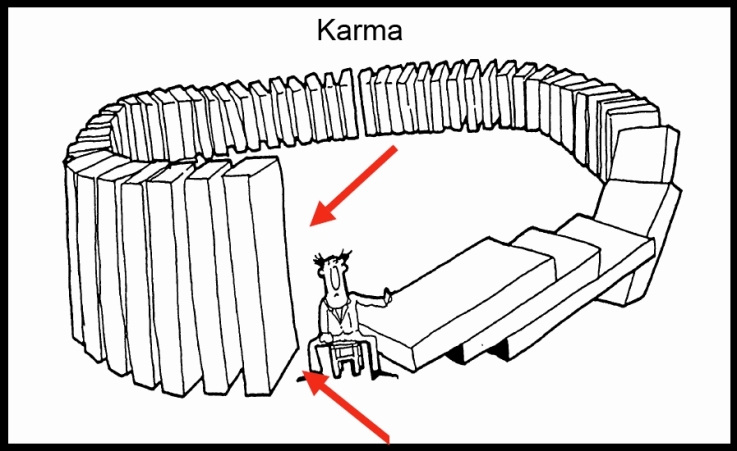
Posted by David Wilk on 02/01 at 05:40 PM
(0) Comments •
Permalink
Enhanced Ebooks - So What?
I’ve heard from any number of publishers and publishing consultants that there is not an economically meaningful market for so called "enhanced ebooks" (which are ebooks that include "features" like audio, video, and interactive elements) and that ebooks are best suited for "immersive reading" of mostly text products. Publishers seem to doubt that readers want or will accept anything other than a straight digital conversion of text based books.
I’m going to suggest that the experience of a so-called "enhanced ebook" is not meant to be the same as the immersive state of text based reading on the print page. If there is a comparative it should be with illustrated print books, which are usually not experienced the same way as readers experience a novel or nonfiction text either. Some have described the experience of these new kinds of books as "grazing." But I don’t think "grazing" is the right term for either experience, as I think it is reductionist. My experience of a book like the wonderful Longleaf, Far as the Eye Can See from UNC Press is not at all the same as my experience of the narrative text like The Forest Unseen from Viking. I don’t expect an ebook that engages me in visual and auditory experiences to be the same as one that engages me purely textually.
On the production side, I think the same comparison should apply. Publishing an illustrated coffee table size book today is economically a tremendous challenge. The cost of publishing is high, shelf and display space is highly constrained, and offshore printing means impossible supply chain problems. By comparison, the cost of publishing an illustrated book in fixed page layout, with or without enhancements, has come down tremendously. Every day the digital equivalent of shelf space increases, as more and more people buy tablets that display these books brilliantly.
Publishers and tablet vendors have by no means figured out how to make and sell digital illustrated books *yet* but the growth of the potential market is so persuasive, and the cost of production now so relatively reasonable compared to print, that the opportunity is becoming more compelling for publishers and creators. Audiences may not be there *yet* either, but we don’t need huge numbers when the breakeven threshold is so relatively low, and the potential for large profits from modest success is clear. Meanwhile, successful or otherwise, a print coffee table book still has to be printed, then shipped from an overseas printer, and then distributed locally, whereas a successful digital equivalent has no such constraints and higher margins. And importantly, there are effectively no returns of digital books.
In my opinion, the creation of more and better fixed layout ebooks, combined with more and better tablets on which to read them, and compelling economics for publishers, will drive the market for these products.
And ultimately, this is not an either/or choice, but an additive situation—books that take advantage of the many features that the digital book experience provides will create new and different consumption experiences for readers, that will do not need to replace or subvert immersive text reading for most readers. Why not? We watch TV and go to the movies, and we - or at least many of us - still somehow find the time to read books. Digital devices give us more opportunities to read text and a chance to experience books in new ways altogether. Publishers are now in position to create new products for new readers and expand the market for our content. In fact, what may be lost sooner than later, is the large-scale market for illustration heavy, beautifully designed print books that has thrived for the several decades prior to the past few years. 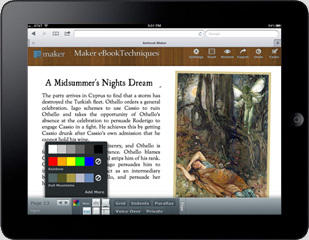
11.2.12 Thanks to Ron Martinez for reading, commentary and advice
Posted by David Wilk on 11/03 at 04:33 AM
(0) Comments •
Permalink
THE GOAL IS NOT TO PUBLISH A BOOK, BUT TO BE READ
Dan Blank is a brilliant marketer. He helps writers build and maintain their careers, their brands, and improve their thinking and execution in marketing their work. The tagline on his website really says it perfectly: Helping Writers & Publishers Make an Impact and Build Their Legacies. Now Dan has put together a terrific online course (that runs September 5 to October 23, 2012) called "Build Your Author Platform," that I am recommending to all my clients. Here’s what he says about it: Too many writers publish books that do not get read. Most books don’t sell that well: they don’t get reviewed, they don’t get shelf space in bookstores or libraries, and most importantly: they don’t make their way into the hands of those readers who would most appreciate them. My friend Jane Friedman said something to me once that gave me chills:
“The most disappointed writers I know are not the unpublished writers, but those who have been published.”
What she means is that these writers were disappointed because after years of hard work, only a few dozen books were sold. That no one cared about their book. With so many more books being published each year; with publishers overwhelmed with the many titles they produce; it is increasingly up to the writer to learn how to connect their writing to readers who will appreciate their work.
Join me and a group of writers for a 6-week online course that will build the platform you need to establish an audience for your writing career.. – TO IMPACT READERS Sign up here. And just to be clear, I have no financial or other interest in Dan’s workshops, I just think what he has to say is valuable and powerful for writers (and anyone else interested in brand and career building) By the way, Dan is also participating in the series of Self Publishing Workshops that I am running along with Betty Sargent of Bookworks. Our next workshop is September 24, 2012 at the Beekman Hotel in New York City. This workshop focuses on the "nuts and bolts" of self publishing for writers, and will include a terrific program, all for the low price of $99. If you’re interested in coming send an email as soon as possible to . 
Posted by David Wilk on 08/18 at 04:54 PM
(0) Comments •
Permalink
Seth Godin’s advice for writers
The best way for an author to use the internet is to slowly build a following. Difficult, time-consuming and effective.
I’m not even sure there’s a useful plan B.
My recent experience working with authors and publishers mirrors what Godin says. It’s an inescapable fact that there is an overwhelming abundance of content today. We can debate endlessly whether this is good or bad for culture, and are we seeing the decline of immersive reading and the rise of ADD behavior in all forms of cultural consumption.
Just about everyone I talk to instinctively recognizes that the "noise" level online is very, very high, and that makes connecting our book signals to readers a very difficult undertaking.
Nonetheless, there are plenty of readers out there for the books writers are writing.
And there is a lot of brainpower being devoted now to figuring out better ways for readers to find the books and other products they need and that will suit them the best. That problem may well be solved sooner than we think.
While Godin says that there is no plan B, he does not suggest whether writers should build their followings on their own, or with the help of others (or a combination of the two approaches). I.e. “do-it-yourself” versus outsourcing.
Personally, I think it is best for writers to spend the bulk of their time writing, rather than being social and devoting valuable time to building a following. You can find plenty of ways to get help on the social side. Of course, the best way to build a following is to create compelling writing, and then to hire really smart people to support you. And yes, sometimes, publishers can help. In the end, all of this is really up to each writer to determine.
There is so much information to keep up with and so many new skills to master, we all need guidance and assistance in some (or many) things we can’t learn or do ourselves. Without some help we end up not having a life. And for writers, time to contemplate, concentrate and create is precious. Why waste it? Seth Godin’s blog is well worth reading. I also always recommend Dan Blank as an inspiring source of ideas for writers. And here is a writer, Jonathan Rintels, who is currently building his following.
Posted by David Wilk on 06/19 at 02:33 PM
(0) Comments •
Permalink
The Path to Success for Publishers
Thank you Dan Blank. In a recent blog post called Writers: The Path To Success is Not a Privilege, But a Choice, Dan said some really great things about writing that I want to endorse and apply to publishers.
Dan started out by talking about a video he saw recently that documents the Fender guitar factory in 1959, where you get to see the crafts people of that time building guitars by hand. And then he looked at newer videos that show that same factory doing the same work today. As he says "Our culture has become so automated, that anything crafted with human hands and a deep level of passion is treated as special."
With all the technological change that surrounds us, it is still the unique ability of an individual writer to create a narrative by hand that makes writing such a special activity.
Dan’s point is that writers should not despair in the face of massive dislocation and change. Writers have more options than ever to have their work published and read. "There is no longer "one way," even in a single writing career. You, the author, are an entrepreneur."
I agree with what Dan says to writers, and in addition, I think publishers too must also believe in their own abilities and their role in the process of bringing great writing to readers. Technology empowers us, but it also confuses us with its speed and efficiency. We lose sight of details when we don’t have our hands and eyes on every word. When we move at digital speed, we forget to pay attention. We’ve got to recommit ourselves to the difficult and time consuming work of publishing.
As Dan points out to writers, you "not only get to create a world in your writing, but you get to choose how that work reaches and effects others.....No, we do not live in simple times. But what is important - CRITICALLY IMPORTANT - is that you have the ability to choose your path."
Publishers, and those who work with writers in the myriad roles that contribute to the publishing process, this is true for all of us as well. We have to believe in the importance and meaning of what we do, and not lose sight of the underlying principles and values that provide meaning to the work we do." I’m working on a presentation on Slow Publishing, in which I will outline these ideas in more detail, and will post it here soon and it will be available as a slideshare as well. To read Dan Blank’s complete post, visit his site, We Grow Media, and subscribe to his blog. And thanks Dan for permission to quote you.
Posted by David Wilk on 05/15 at 05:03 AM
(0) Comments •
Permalink
Booksellers and Co-opetition
Co-opetition: Cooperative competition. Practice where competitors work with each other on project-to-project, joint venture, or co-marketing basis.
Historically, most independent bookstores have viewed Amazon and Barnes & Noble not only as direct competitors, but as enemies. Which is certainly understandable.
Barnes & Noble has long been a dominant force in retail bookselling. B & N gets better business terms than small stores, is able to publish its own books, and now, of course, like Amazon, has major advantages over independent stores in selling ebooks and print books online.
And for so many bookstores, Amazon appears to be its most dangerous and predatory competitor - its discounting has always been impossible for any land based store to match, it doesn’t charge sales tax (in most states), and it is open 24 hours a day 365 days a year. Its proprietary Kindle e-readers more or less established and then dominated the ebook market, because of Amazon’s unmatched ability to offer instant gratification, broad selection and low prices integrated with its low-priced device.
Demonizing your competitors is of course an emotional response when your livelihood is threatened. But Amazon, Barnes & Noble, and for that matter, Apple, are all rational actors in the business stage. It make good business sense for Barnes & Noble to have its own e-reader and to not carry Amazon published print books in their stores. They are competing with Amazon head-to-head and can use their market share and national bricks-and-mortar presence to battle with Amazon on a number of fronts.
It does not make sense, however, for independent bookstores to marginalize their own businesses by boycotting the entire digital reader business, when their own customers are happily, if in some cases, guiltily patronizing their competitors.
Kindles, Nooks, and iPads are increasingly owned by many hard core readers. Who are or should be any booksellers’ best customers. All these devices are being sold by plenty of retailers beyond their manufacturers’ own retail outlets. These days you can buy Nooks, Kobos, Sony Readers and Kindles at Staples, Office Depot, Best Buy and many others, literally in hundreds of retail outlets and websites.
Why should independent booksellers forego these revenue streams and lose contact with their customers as ebooks and digital reading devices continue to grow and print reading declines? Certainly some will argue that they will lose their independence this way. I think not. Bookstores sell the same print books as their competitors. Why should they enable their customers to decide that independent bookstores are unnecessary or irrelevant?
There are solid business reasons for independent booksellers to practice co-opetition and join the device selling market.
1. Profit. Someone is going to sell these devices to your customers. Why shouldn’t it be you?
2. Long term customer value. Sure, once a customers owns the reader, there is a good chance she will buy books from your competitors. But if you sell the reader to a customer, and show her how to use it, you have a far better chance to get her to buy books for it from your IndieBound portal rathern than from B&N or Amazon. And you again offer personalized service, which is what your business is based on, right?
3. Again, profit. Become an affiliate of Amazon and Barnes & Noble. Even your customers go from your website to either of these big retailers to buy their ebooks, you still capture some revenue that otherwise you would never see. And people who buy e-readers buy more print and ebooks. From you, instead of from the other guys.
4. Knowledge=power. If you are seen as expert in e-reading technology, as well as in the books that you traditionally are known for, you will have more people coming to your store or website for news and information about this growing universe. Ebooks are not going away. Don’t be marginalized.
5. Who cares about how and where people acquire their books? You are a community based business. Amazon can’t bring live writers anywhere. B&N stores are still chain store experiences. If you become essential to your customers, you will always win more of their business. Give customers another reason to buy from you and not the other guy.
6. Take advantage of the millions of dollars that Amazon, Apple and Barnes & Noble have already invested in devices and advertising. Let them pay for sales you make.
7. Broaden your business. In late February, there were reports that Google e-books may not be available through all independent booksellers anymore. True or not, if Google changes course one day in the future, independent booksellers will need more options. Becoming broad based retailers of all available e-reading devices will give you a better chance of helping to shape the digital reading future.
Up to now I have not promoted Kobo or Sony Reader. I do think that booksellers should sell as many ebook devices as they can. Both Kobo and Sony devices are not exclusive to any national retailer. They both utilize industry standard epub file formats which booksellers offer through Google ebooks powered IndieBound. I know the profit margins on e-readers are slim for retailers, so if you don’t want to sell Kindles and Nooks, why not at least sell both of these devices in your stores in order to compete with Amazon, Apple and Barnes & Noble? In fact, selling a range of devices gives customers a range of choices they cannot get from either Amazon or Barnes & Noble. If a bookstore is a center for reading, why not carry as many different types of readers as possible? Some may be difficult for small retailers to carry. It’s not easy to become an Apple reseller and for that matter, maybe Amazon would not allow indies to sell their devices directly, forcing booksellers to buy their products from wholesalers instead at lower margins. But why not try?
Barnes & Noble will soon be providing Nooks and ebooks to the Waterstones chain in England. Why not to independent booksellers in the US too?
Granted, e-reading devices and ebook delivery platforms require significant investment. Maybe booksellers will need to form a marketing co-op (ala the national hardware brands like Ace) and use their combined buying power to build and support a deal with Kobo or B&N. Or all devices, as I have suggested here. Selling just through Google e-books without devices just may not satisfy customers or provide bookstores with enough clout in the emerging digital landscape. In the end, bookstores need to become alot more digital friendly, and it’s almost past time for this to happen. Most readers want a healthy book marketplace, with a variety of buying choices. Co-opetition is one way for independent booksellers to secure their future. Embracing a broader view of the retail digital marketplace and contributing to its shape may be the only way for independents to retain a meaningful role as community based bookstores.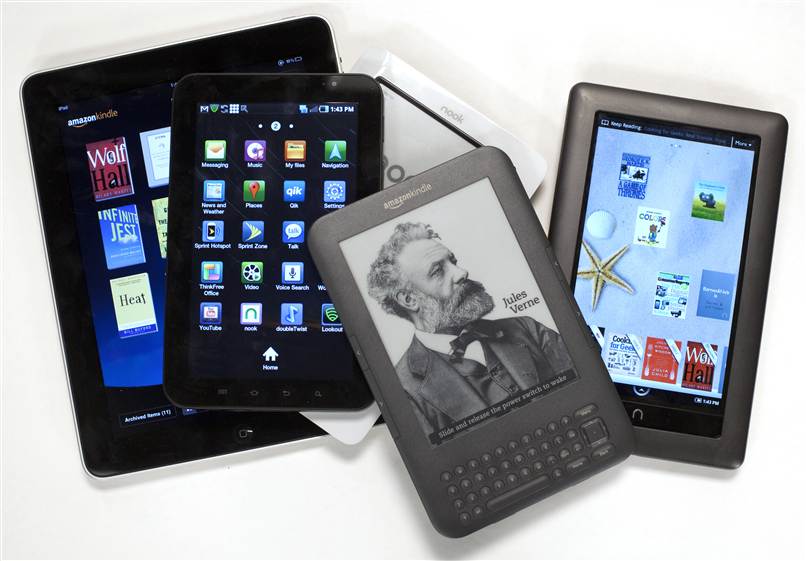
David Wilk
February 28, 2012 (thanks to Phil Turner for editorial input)
Posted by David Wilk on 02/28 at 05:04 AM
(0) Comments •
Permalink
Technology Time Lines
E-books are to books what horseless carriages are to horse-drawn carriages. In other words, we are only a short distance down the path to the development of digital writing, publishing and reading.
Would it be possible to say that the term e-book should be discarded as Horseless Carriage was supplanted by Automobile or eventually the “car”?
I wonder.
It has not been easy for digital printers, even Lightning Source, the largest, to get across the notion that Digital Short Run printing is really a better, more descriptive and more accurate term for what they provide than "POD," but Print on Demand sounds better, and POD seems to make more sense to folks than the more opaque DSR.
Terminology is likely not created by the technologists who make the products and maybe not even by the marketers who sell them. It’s always about the users and what they see, feel and believe.
Television was in many ways a new development, not radio with pictures, and not exactly movies at home on a tiny screen. Television is a great descriptive and TV is the perfect abbreviation for modern culture, and thus has been absorbed into the zeitgeist at a very deep level.
It seems to me that the true definition of an e-book may be difficult to create. People like the term “e-book,” because it is descriptive and connotative (much like Horseless Carriage is a perfect description of the early automobiles, and works in the same way we have created in the e-book a sort of relational analogue to the print book).
We know what a book is. An “e” book sounds just like what it is, an electronic book.
But now change is accelerating in technology, and the display of book-like content on screens of many types and sizes, and what will emerge over the next few years is an explosion of digital reading technology. And with that will come an explosion of creativity, as publishers, authors and technologists try to imagine what the digital reading experience can and should mean to readers.
Soon after the first horseless carriages hit the roads, inventors in garages and barns all over America (and the world) were building their own versions of motorized transport. We saw cars that ran on steam, electricity, and gas, cars with six wheels, cars steered by tillers, engines in front, middle and back, one cylinder, two cylinders and many more variations on what motorized vehicles could and would be. Some worked, some didn’t, but as time went on, inventors, manufacturers and retailers all learned what really worked for drivers and passengers, who literally drove the technology into use.
We are seeing the same sort of innovation in reading devices and content now. We will soon learn what works and what doesn’t, and we can be certain of experiencing many aha moments as the future unfolds. And just as many, or more, deadends, good ideas that fail, great technology that simply does not delight and thrill the user. From the writers’ and readers’ perspective, what we are creating are Digital Reading Experiences on Digital Reading Platforms and Devices. But no one wants to say “how’s that new Digital Reading Device you bought the other day?”
Maybe until a perfect new term like “blog” is coined by someone, we’ll be stuck with “e-book” even as the range of what is possible to be written, made, displayed, read and consumed expands exponentially. And maybe what we will call these objects and experiences does not really matter as long as they are great at what they do.
Meanwhile, pass me that DRD would you?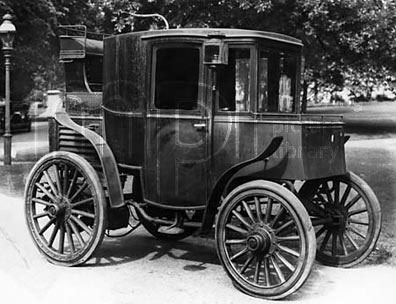
David Wilk
February 1, 2012
Posted by David Wilk on 02/03 at 02:34 AM
(0) Comments •
Permalink
Book?
I want to write a book .... How many of us have said that to ourselves, or out loud to our friends or family? I’d guess almost everyone I or you know has uttered these words at one time or another, or perhaps many times over our lifetimes.
Writing a book is a cultural milestone for anyone who writes one, and has grown to have tremendous meaning and impact.
It’s pretty common to hear people in the book business (writers too) complain that there are "too many books," worried as they are that the bad will drive out the good, or at least make it difficult to find the good ones among the dross. I do not doubt that is difficult to find all the good ones, but I think finding a great book to read today is like falling off a truck.
Isn’t it interesting, and in some ways heartening, to realize that writing a book is something that so many people aspire to? Doesn’t that tell us something good about our culture? At the same time we also worry about the level of literacy in America, and the fact that millions of our fellow citizens never read books, hell, maybe never read magazines, newspapers, or in some cases even the street signs that they ought to be reading to know when to stop, yield, or merge properly.
It seems to me that we are in a golden age of creative culture, whether we recognize it or not. It may not last - we can’t know what kinds of challenges we are going to face in the future that could diminish the time we have to read, write, listen to music, make music, watch films, make films - so much of this engendered by the openness and vast reach of the internet.
If anyone in the future has enough time to sift through all the creative outputs of this era, I believe ours will be thought of as an amazingly productive and interesting culture like no other that has come before us.
I think this huge wave of cultural creativity is a good thing. I don’t care that we don’t have commonly accepted "giants" of literature anymore, I’m happy that there are so many great books to read, new writers to be discovered, riveting stories I may never have time to uncover.
We don’t have a homogenous culture anymore. When those "great" writers of their times were considered great, the critics and tastemakers were a small bunch, themselves a homogeneous group, with similar backgrounds and educations or aspirations to same. Even if you look at the rebels of past times, like the Beatniks, they had all read and then rejected the same writers, they were reacting against the given culture, but to do that, they first had to consume and understand it. Today there is no single stream of culture. I think that is a good thing. But it does eliminate a certain cultural certainty and comfort, which for some people is uncomfortable.
I’m even thrilled that so many writers want to become publishers, or at least make themselves more involved with the business of publishing. I think that is a healthy development too. The wide availability of tools and information spurs creativity on multiple levels.
What this means for everyone who is writing, making music, art, film, video, etc., is that they have to focus on what they do first and foremost, and not worry about becoming rich, famous or even mildly popular. With so much output, the only thing you can strive for is attention.
We live today in an attention economy, where time is more valuable even than money (mostly because we know instinctively that time is precious, fleeting, and in finite supply). All that matters is to find audiences, and to be found (and appreciated) by them. And that makes it all kind of fun, doesn’t it? 
Posted by David Wilk on 11/25 at 05:30 PM
(0) Comments •
Permalink
|
Buzz, Balls & Hype
MJ Rose’s excellent blog Writerscast Where I podcast interviews with writers and thinkers about books, publishing and the future of culture. Ron Silliman’s Blog
one of my favorite and most regular visits Michael Hyatt, CEO of Thomas Nelson Publishers
Incisive, intelligent blog well worth bookmarking! Publishing Insider
The renowned Carl Lennertz covers the book business and more Fresh Eyes Now
Robert Gray’s consistently interesting bookseller’s journal Book Slut The Long Tail
Chris Anderson’s ongoing exploration of how the web and human behavior creat new opportunities for information to be distributed (my words) Galley Cat
Blog about the bookbusiness Conversations in the Book Trade
interesting site Flaming Grasshopper
Chelsea Green Press’ ongoing blog Publishing 2.0: the (r)Evolution of Media
A blog about the (r)evolution of media, driven by the migration of media to the Web and new digital technologies by Scott Karp. Highly recommended. E-Reads
An e-book business site, but their blog covers book business stories as well. The Digitalist "The Digitalist was originally conceived as an internal sounding board, discussion forum and blog for the publisher Pan Macmillan to start thinking about a range of digital issues it faced. It still is. Only now it’s open for everyone to join the debate about books, publishing, the web, and the future." Highly Recommended reading for anyone interested in the future of publishing. Teleread "Bring the E-books Home" David Rothman’s outstanding blog covering all things related to e-books, now with the assistance of Paul Biba. Invention Arts Really smart people thinking hard about books, publishing and the emerging social conversation. Creators of Aerbook: an author platform service for the social web. Highly recommended. |


